Reduce your inventory and improve your delivery performance

3 min read
18. May 2026

Back to the inspiration page

A story from the real world of procurement.

Recently, I was in a meeting with the Head of Procurement at a large Danish trading company. The company generates more than DKK 1 billion in revenue, and just a few days earlier, the following conversation had taken place between the CEO and the Head of Procurement:

CEO: “We need to reduce our inventory value and improve our delivery performance toward customers.”

Head of Logistics: “But that’s a paradox.”

CEO: “Yes, but it’s your paradox.”

This conversation is not unusual. Quite the opposite. Everywhere, procurement leaders are working hard to keep their businesses healthy and protect the core business. They stand right in the middle, balancing inventory levels and the company’s ability to deliver. At the same time, they operate in the tension between strong operational and commercial interests.
 

How do you approach the paradox?

The Head of Procurement and I quickly agreed that it is short-sighted to evaluate procurement solely based on inventory size, because inventory should always be seen in relation to revenue.

Conclusion: Inventory turnover is a better indicator, as it expresses the relationship between inventory and revenue.

Inventory turnover tells the company where — meaning which SKUs — it has invested in inventory, and how quickly that investment is returned.

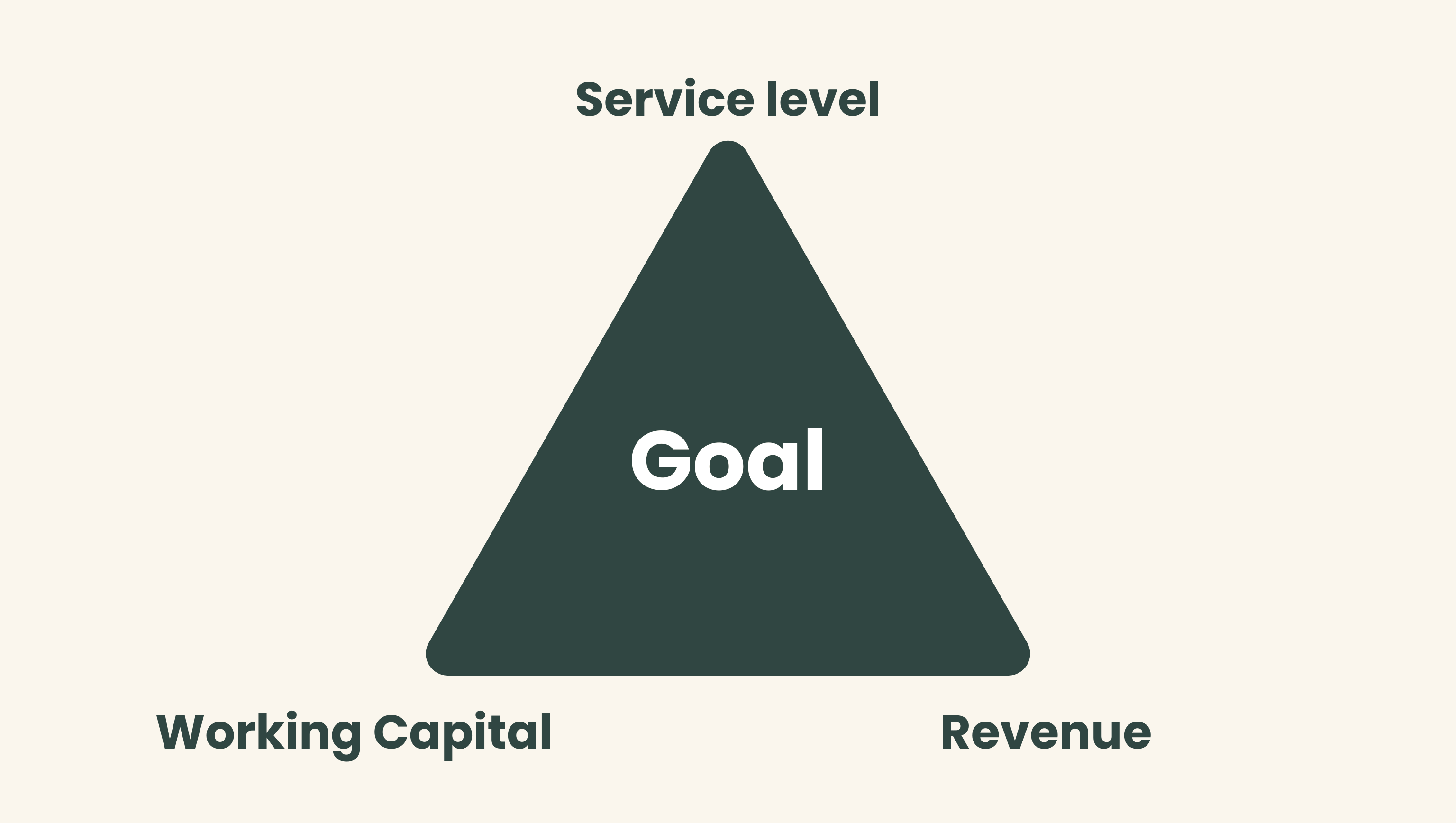
In other words, inventory turnover is about making explicit decisions regarding the company’s desired service level (delivery performance), working capital, and revenue.


Triangle-service-capital-revenue

Use data to make the “right decisions”

The challenge for many companies is that they lack transparency and insight into data, making it difficult to make explicit decisions. As a result, inventory is often placed randomly on slow-moving SKUs — which reduces overall inventory turnover.

With a classic double ABC analysis, it becomes clear which products the company should invest heavily in and where inventory levels should be kept low in order to achieve optimal turnover across the entire inventory.


Start with a simple ABC classification

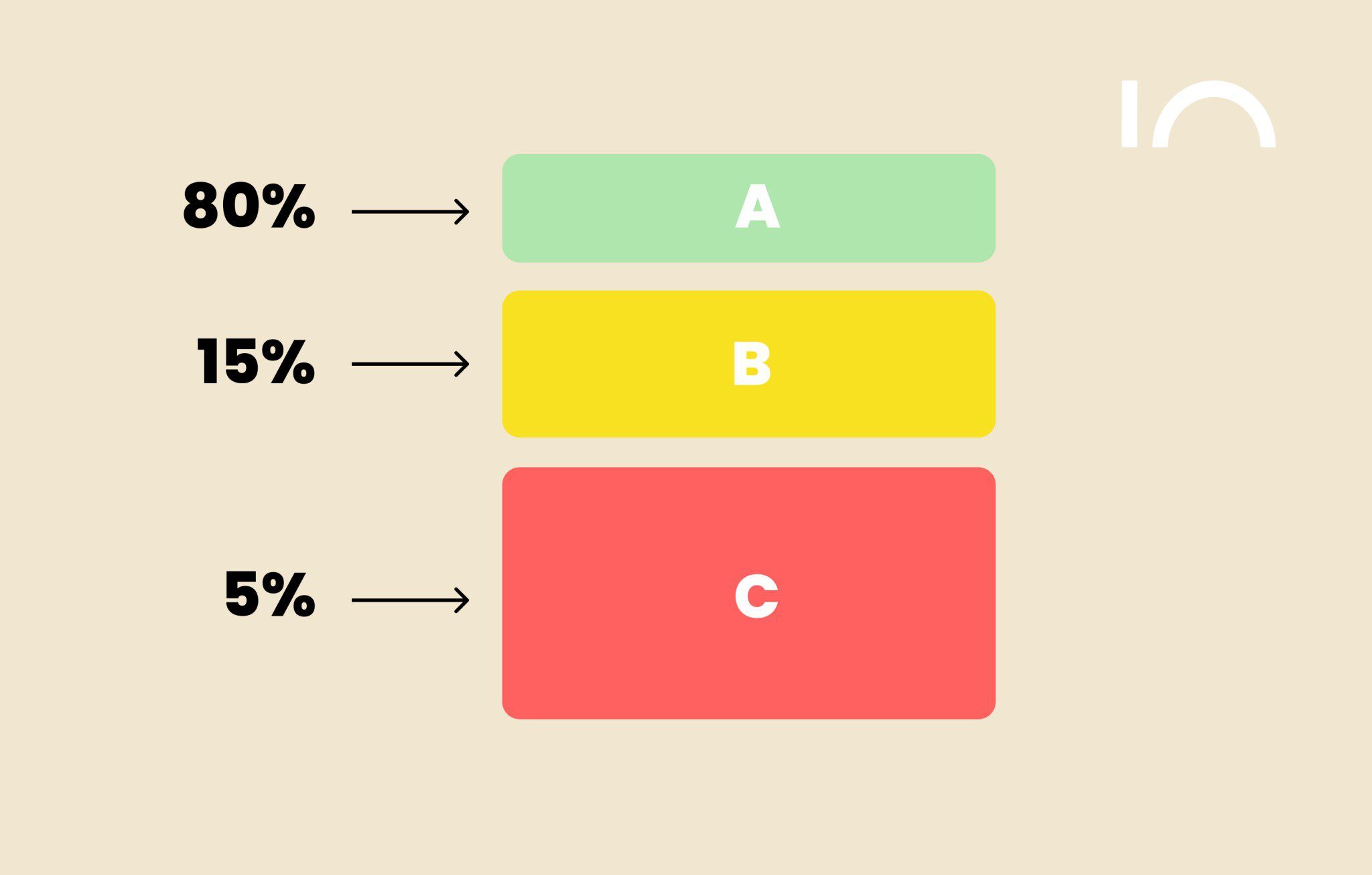
In an ABC classification, products are divided into three categories based on performance. The distribution typically follows an 80/15/5 rule. Based on revenue, this means:

  • A-items account for 80% of your revenue (even though there are few of them)
  • B-items account for 15% of your revenue
  • C-items account for the remaining 5% (even though there are many of them!)

The ABC classification gives you a shared language that makes it easier — in a factual and data-driven way — to discuss which products matter more than others.

When a product is labeled as “A,” it becomes easier to justify spending more time on it compared to a C-item. When both you and your colleagues understand the meaning of A, B, and C, it becomes easier to prioritize daily work and establish rules that ensure everyone focuses on what creates the most value.

Read also: Blog ABC Categorization: How to Get an Overview

 
abc-categorization

The important double ABC classification

A single ABC classification gives you a snapshot based on one parameter, such as revenue.

However, it is rarely enough to evaluate a product on just one parameter. Two products can generate the same revenue but behave very differently.

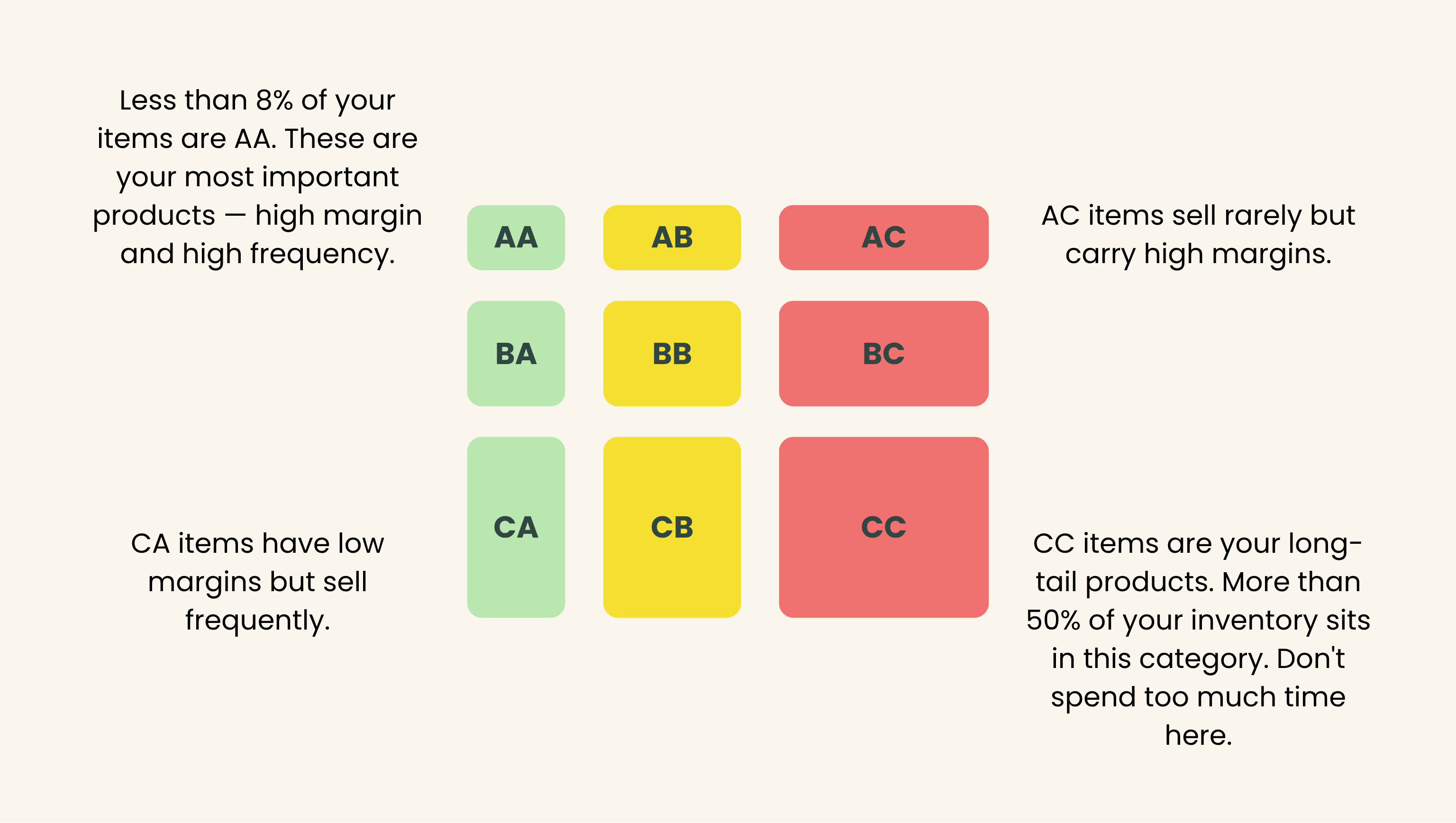
To gain better insight, you should evaluate products based on at least two parameters: picks (frequency) and revenue. This is done by creating two separate ABC classifications and combining them into a double ABC classification.

ABCmatrix
  • AA are the most profitable and frequently sold products.
  • CC are the least profitable and rarely sold products.
  • AC are profitable but rarely sold (often irregularly).
  • CA are products that sell frequently but generate limited revenue..


Focus on the products that matter!

Your AA products typically make up less than 8% of your product portfolio but account for 50% of your revenue (and sometimes more).

  • Keep a close eye on your AA products — this is how you protect your core business
  • Use ABC classification to develop procurement policies and purchasing recommendations
  • Ensure your buyers understand the importance of these products — it pays off


Back to the inspiration page